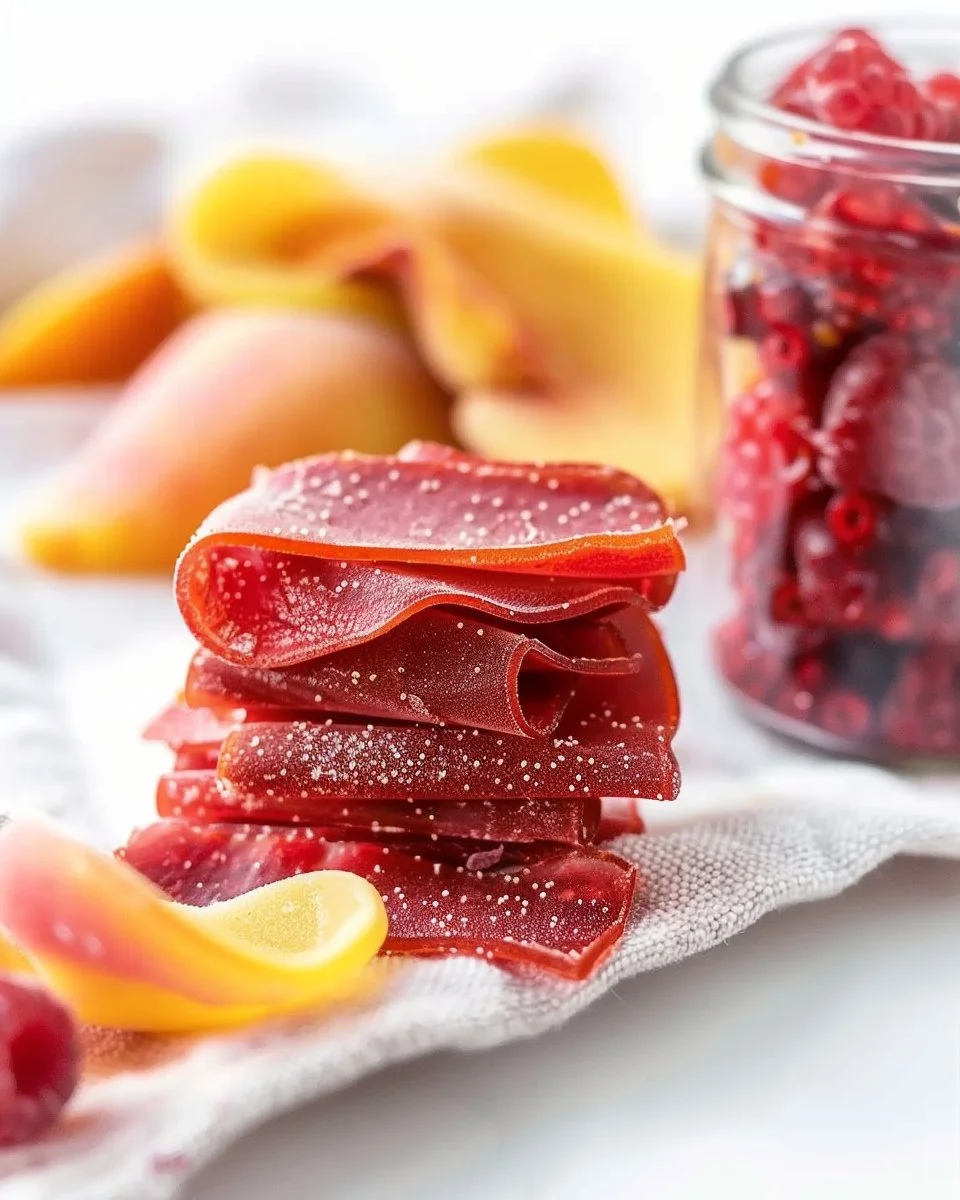
Discover the Joy of Homemade Peach Raspberry Fruit Leather
Fruit leather isn’t just a treat; it’s a nostalgia trip wrapped in a chewy, flavorful package that pulls at the heartstrings of childhood. Remember those sweet, sticky snacks you might have found in your lunchbox? If you’ve ever desired to bring the love of all-natural fruit snacks back into your life, you’ve landed on the right recipe! The Homemade Peach Raspberry Fruit Leather Recipe showcases just how easy and delicious it can be to create your own gourmet fruit snacks at home.
With the ability to customize flavors and control every ingredient, making homemade fruit and berry gummies is not only healthier but also incredibly satisfying. Let’s dive into the world of homemade fruit leather and awaken those taste buds!
Why Choose Homemade Fruit Leather?
When it comes to snacks, store-bought options are often loaded with preservatives and added sugars that can detract from the natural sweetness of ripe fruit. Here’s why making your own fruit leather makes sense:
- All-Natural Ingredients: You control everything that goes in, ensuring no harmful additives.
- Vibrant Flavors: Fresh, ripe fruits represent the essence of what nature has to offer, allowing for unique flavor combinations.
- Family Fun: Crafting fruit leather can be a great activity to involve children in the kitchen, teaching them about healthy eating.
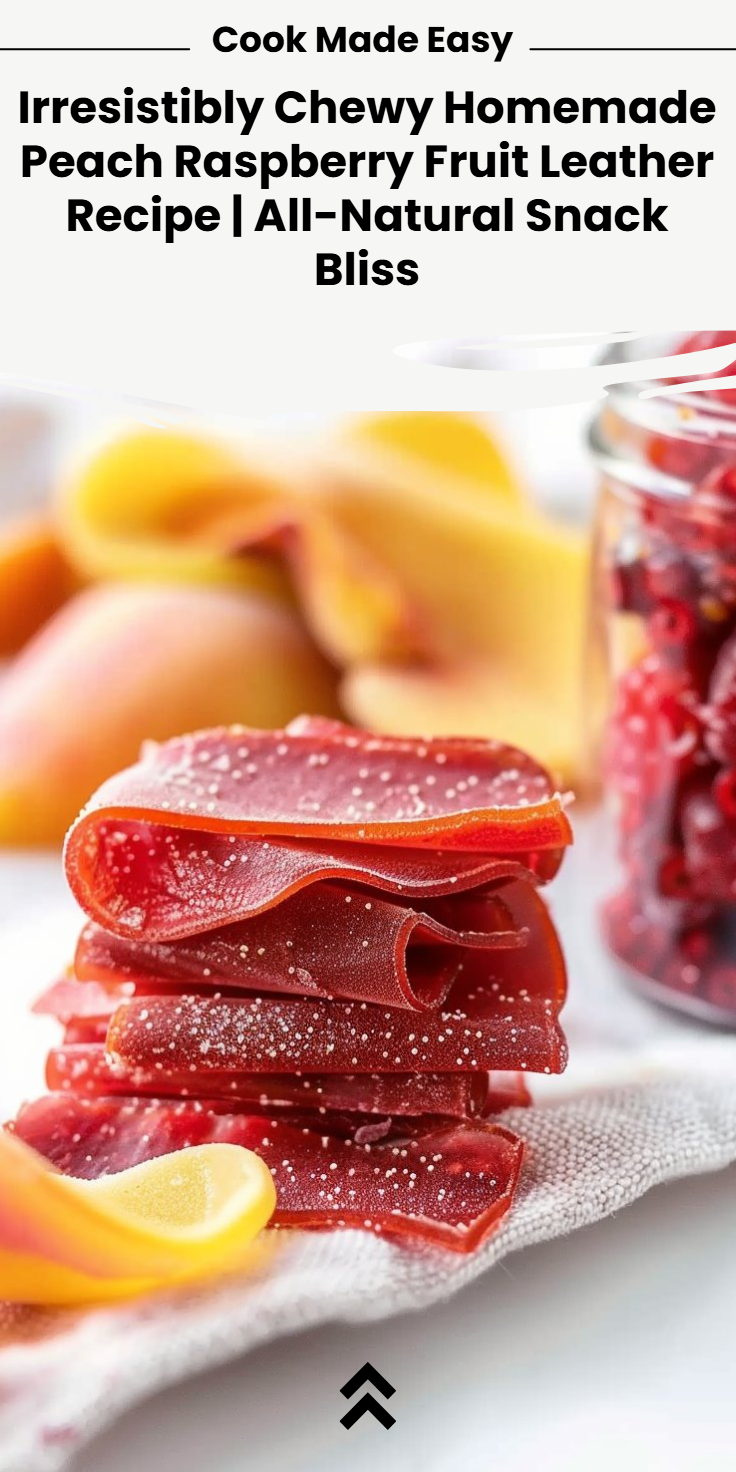
The Magic of Peach and Raspberry
So why peaches and raspberries? These fruits pair beautifully, creating a balance of sweetness and tartness. Peaches are juicy and aromatic, providing a delightful base, while raspberries add a punch of flavor and a vibrant color. Together, they create a delicious blend that’s not only pleasing to the palate but also packed with nutritional goodness.
Ingredients You’ll Need
To create your Homemade Peach Raspberry Fruit Leather, you’ll need just a few simple ingredients:
- 2 cups fresh peaches, peeled and diced
- 1 cup fresh raspberries
- 1-2 tablespoons honey or maple syrup (optional, depending on your sweetness preference)
- 1 tablespoon lemon juice for brightness
With these ingredients, you can whip up a delightful fruit leather that you and your family will love!
Step-by-Step Guide to Making Fruit Leather
Making fruit leather may sound daunting, but it’s surprisingly simple. Follow these steps to create your first batch:
- Prepare Fruit:
Start by peeling and chopping your peaches. Place both the peaches and raspberries in a blender. - Blend It:
Add the lemon juice and honey (if using) to the blender. Blend until you have a smooth purée. - Spread and Flatten:
Line a baking sheet with parchment paper. Pour the fruit purée onto the sheet, spreading it evenly into a thin layer, about 1/8 inch thick. - Dehydrate:
Preheat your oven to the lowest setting (approximately 140°F or 60°C). Place the baking sheet in the oven and leave the door slightly ajar to allow moisture to escape. Dehydrate for 6-8 hours or until the fruit leather is dried and still slightly tacky. - Cool and Cut:
Once dried, remove the sheet from the oven. Let it cool completely before cutting into strips or squares. - Storage:
Roll the fruit leather in parchment paper and store in an airtight container. It will last up to a month!
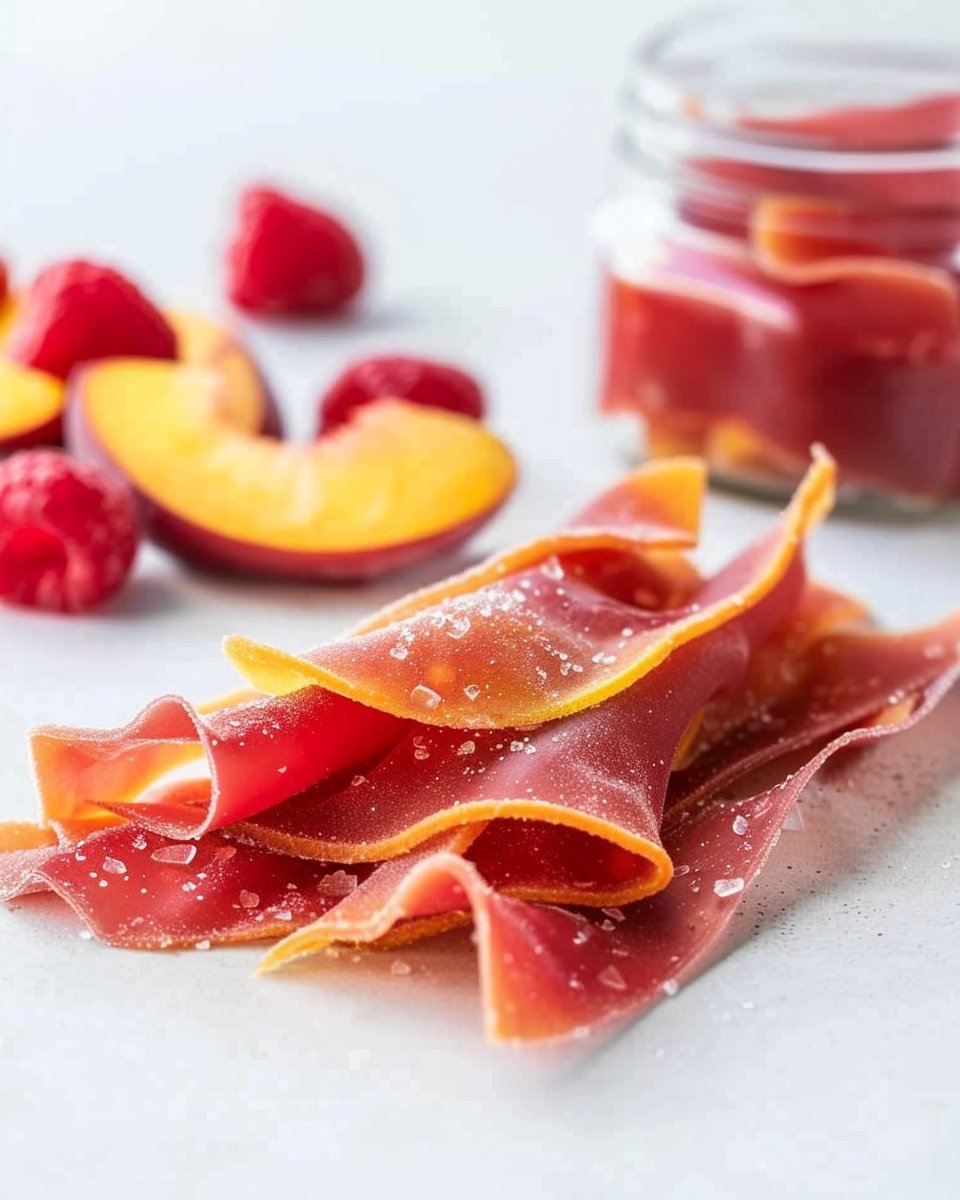
Expert Tips for Perfect Fruit Leather
- Choose Ripe Fruits: The ripeness of your fruit directly affects the flavor of your leather. Look for perfectly ripened peaches and fresh raspberries for optimal sweetness and taste.
- Texture Check: If you’d like a smoother texture, consider straining the blended mixture through a fine-mesh sieve before spreading it out.
- Experiment with Flavors: Feel free to mix and match fruits based on what’s in season or what you prefer. Strawberries, blueberries, or even a hint of banana can take this recipe to new heights.
- Making it Vegan: Substitute honey with agave syrup or simply omit it for a naturally sweetened version.
Common Pitfalls to Avoid
- Too Thick: A layer that is too thick will take longer to dehydrate and may not dry evenly.
- Over-Drying: Be cautious not to over-dry; it should be pliable with just a bit of tackiness.
Serve It Up!
Once your homemade fruit leather is ready, the serving possibilities are endless! Here are some ideas:
- Pack it as a nutritious snack for school lunches or outdoor adventures.
- Use it as a vibrant garnish for desserts or yogurt parfaits.
- Crush it into bite-sized pieces and mix into homemade granola for added texture and flavor.
Nutrition Notes
This Peach Raspberry Fruit Leather is not only a delightful snack but also comes with numerous health benefits. Peaches are packed with vitamins A and C, while raspberries are a great source of antioxidants and fiber. By controlling the added sugars, you can ensure you are providing a nutritious alternative to processed snacks.
FAQs About Homemade Fruit Leather
Can I use frozen fruit for the Homemade Peach Raspberry Fruit Leather Recipe?
Yes! Just thaw the frozen fruit and drain excess liquid before blending to ensure a good texture.
How do I store homemade fruit leather?
Store your fruit leather in an airtight container in a cool, dry place. It can last up to a month.
What other fruits can I use for making fruit leather?
You can experiment with a variety of fruits such as strawberries, mangoes, or apples to create unique flavors!
Is making fruit leather healthier than store-bought versions?
Absolutely! Homemade fruit leather allows you to control the ingredients and avoid added sugars and preservatives commonly found in store-bought options.
Can I make fruit leather without using a dehydrator?
Yes! Your oven works perfectly for dehydrating fruit leather. Just use the low-temperature setting and keep the oven door slightly ajar.
In Conclusion
Making your own Homemade Peach Raspberry Fruit Leather expands your snack repertoire without sacrificing health or flavor. With just a handful of ingredients and a bit of patience, you can create a nutritious and satisfying treat that your family will love. Embrace the joy of crafting all-natural snacks and experience the wonderful flavors of homemade goodness! Rediscover the joys of fruit snacks and enjoy every chewable moment.
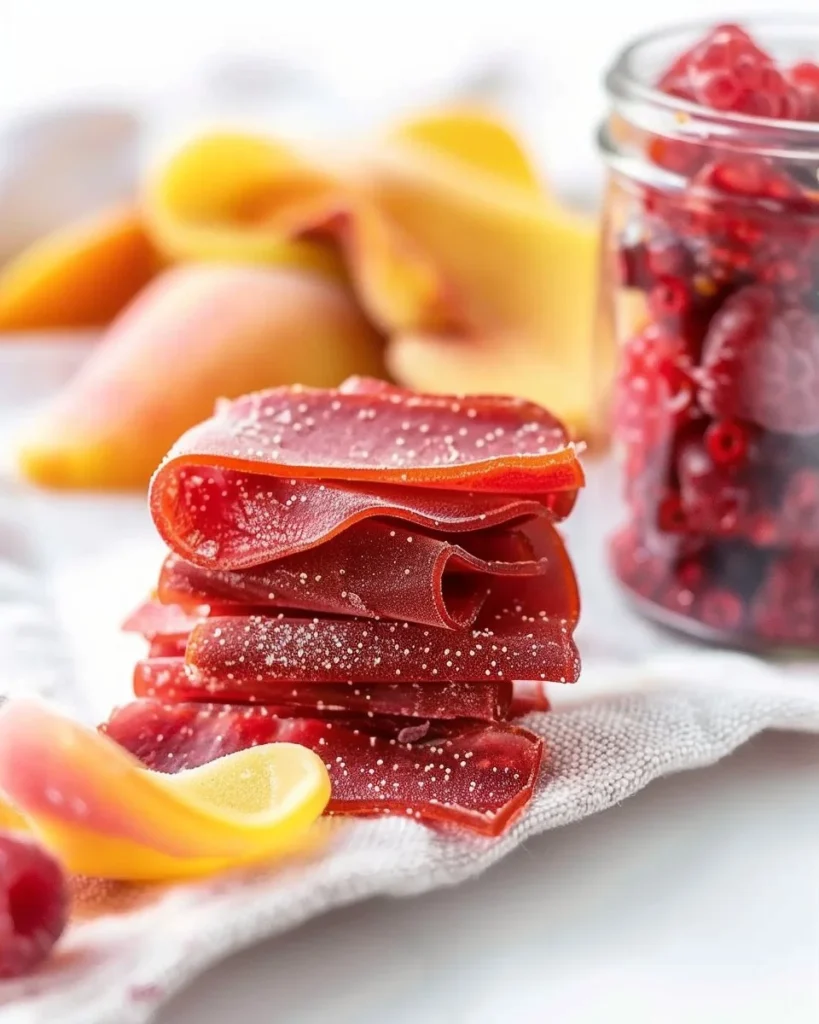
Homemade Peach Raspberry Fruit Leather
Ingredients
Method
- Start by peeling and chopping your peaches. Place both the peaches and raspberries in a blender.
- Add the lemon juice and honey (if using) to the blender. Blend until you have a smooth purée.
- Line a baking sheet with parchment paper. Pour the fruit purée onto the sheet, spreading it evenly into a thin layer, about 1/8 inch thick.
- Preheat your oven to the lowest setting (approximately 140°F or 60°C). Place the baking sheet in the oven and leave the door slightly ajar to allow moisture to escape. Dehydrate for 6-8 hours or until the fruit leather is dried and still slightly tacky.
- Once dried, remove the sheet from the oven. Let it cool completely before cutting into strips or squares.
- Roll the fruit leather in parchment paper and store in an airtight container. It will last up to a month!